
Introduction to Playing Card Sizes
Playing cards have been used for centuries across cultures and games. Whether for classic poker night, trading card games, or family fun, understanding the standard size of playing cards is essential for game developers, designers, and collectors.
The size, shape, and dimensions of a playing card affect its handling, storage, and usability. From poker cards to trading card games like Pokémon or Magic the Gathering, different card sizes serve different purposes.
In this article, we explore everything about playing card dimensions, including corner radius, aspect ratio, and the thickness of a deck of cards.
What Is the Standard Playing Card Size
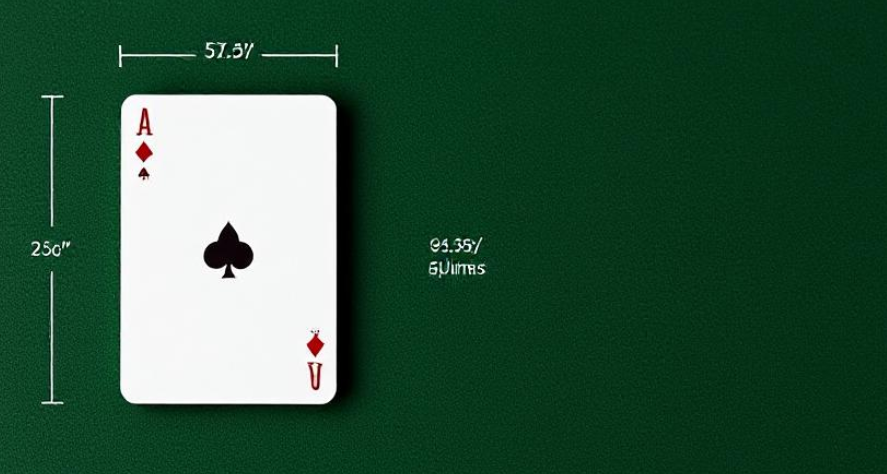
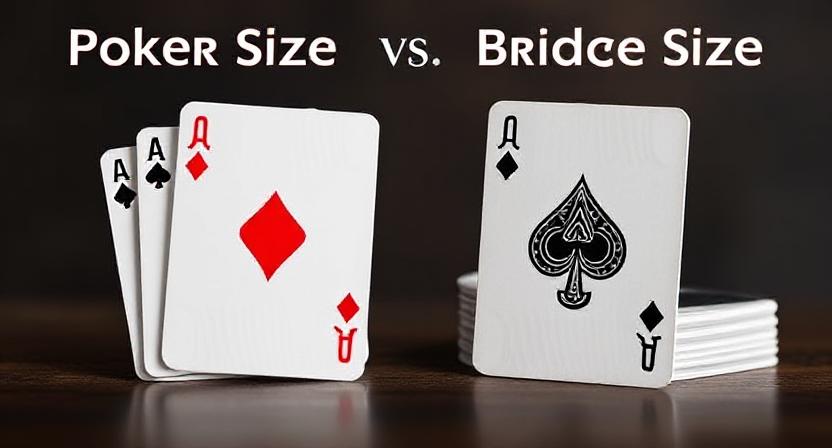
The standard playing card size used in most poker and casino games is 2.5 inches wide by 3.5 inches tall, which is equivalent to 63.5 mm by 88.9 mm. This format is widely known as poker size playing cards.
Bridge cards, on the other hand, are slightly narrower. They measure 2.25 inches by 3.5 inches, giving them a slimmer profile ideal for games requiring more cards held in hand at once.
These dimensions are not just random. They offer the ideal card size ratio for handling, shuffling, and durability. The most common aspect ratio of a playing card is 7 to 5, giving it a slightly rectangular shape.

Playing Card Thickness and Corner Radius
One often overlooked element is the thickness of a playing card. Most cards are printed on cardstock ranging from 280 to 330 gsm. In terms of inches, a single playing card is typically about 0.011 inches thick.
A deck of 52 cards with no jokers is around 0.59 inches thick or roughly 15 mm. If you add jokers or packaging, the total deck thickness can reach up to 0.75 inches or 19 mm.
Cards also feature rounded corners for better handling. The standard playing card corner radius is usually 0.125 inches or 3.2 mm, allowing smooth shuffling without damage.

Dimensions of a Deck of Cards
A full deck of cards includes 52 standard cards plus 2 jokers and sometimes additional extras. The physical dimensions of a deck of playing cards are around 3.6 inches long, 2.6 inches wide, and 0.75 inches thick, depending on the material and packaging.
Deck of cards box dimensions generally measure about 3.75 inches by 2.75 inches by 0.875 inches, offering a snug fit. This makes them portable and ideal for casual or professional card play.
The total weight of a full deck with packaging is approximately 3.3 to 3.6 ounces, making it lightweight and travel-friendly.

Aspect Ratio and Shape of Playing Cards
The aspect ratio of a playing card is typically 7 to 5, which balances readability and space efficiently. This proportion is ideal for fitting artwork, numbers, and suits clearly without clutter.
This same aspect ratio applies to trading cards like Pokemon cards, Magic the Gathering cards, and sports cards. These cards also use the 2.5 by 3.5 inches size, maintaining consistency across different card games and industries.
Understanding the playing card size ratio is essential for custom game developers. Whether you are creating a tarot deck, custom TCG, or educational cards, knowing the standard dimensions will ensure compatibility with existing sleeves, boxes, and accessories.
Trading Card Size and Specifications
Standard trading card dimensions are also 2.5 inches by 3.5 inches, which matches poker-sized playing cards. This makes trading cards easy to store, grade, and protect using widely available card sleeves and binders.
The thickness of trading cards varies based on material. Most modern TCG cards are printed on 330 gsm black core cardstock, offering durability and premium feel. The corner radius on trading cards also mirrors that of poker cards, around 0.125 inches.
The Pokemon card size is the same as standard playing cards. If you are asking are Pokemon cards the same size as playing cards, the answer is yes, making them interchangeable in terms of sleeves and boxes.
Poker Size vs Bridge Size Playing Cards
There are two main types of standard playing cards in terms of width — poker size and bridge size. While both are the same height at 3.5 inches, poker cards are 2.5 inches wide, and bridge cards are only 2.25 inches wide.
Poker size playing cards are preferred in casinos and home games due to their bold design space and handling. Bridge cards are ideal for games like Bridge or Canasta where multiple cards are held and played simultaneously.
The difference may seem small, but it significantly impacts gameplay. Choosing between the two depends on the type of card game and the comfort of the players.
International Card Sizes and Metric Dimensions
In metric units, the standard playing card dimensions are 63.5 mm by 88.9 mm. This size is consistent across most regions, including the United States, Europe, and Asia.
However, some specialty cards, like tarot cards, come in larger sizes. A standard tarot card size is around 70 mm by 120 mm, offering more room for intricate illustrations.
For reference, here are some common card sizes in mm:
- Poker card size: 63.5 x 88.9 mm
- Bridge card size: 57 x 88.9 mm
- Tarot card size: 70 x 120 mm
- Index card (1/8 size): 74 x 52 mm
These differences are important when choosing card sleeves, printing specifications, or storage solutions.
Playing Card Size in Pixels for Digital Use
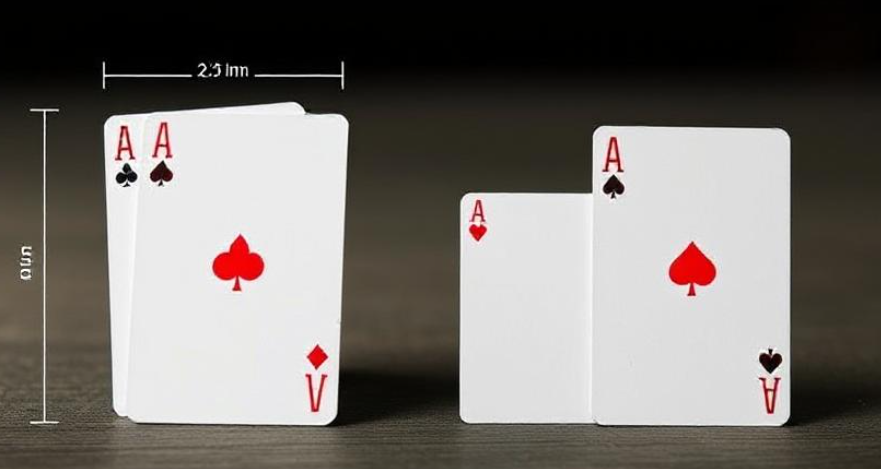
If you are working with digital designs of playing cards, the pixel size matters. At 300 DPI (dots per inch), the pixel dimensions for a standard playing card are:
- 750 pixels wide by 1050 pixels tall
This resolution ensures crisp print quality without losing detail. For web or screen usage, 150 DPI is often sufficient, resulting in:
- 375 pixels by 525 pixels
Always design in high resolution first, then scale down for web or mobile use.

Conclusion
Understanding the dimensions of playing cards helps you design, collect, or play with confidence. Whether you are dealing with poker cards, trading cards, or custom decks, knowing the standard card size, aspect ratio, and thickness ensures compatibility and quality.
From corner radius to deck box size, every measurement plays a role in how cards feel and function. Whether you are building a new card game or buying the right sleeves, using these standard playing card dimensions will make the process smoother and more professional.
If you are developing your own cards or buying them in bulk, use this guide as your go-to reference for everything related to playing card sizes.
Frequently Asked Questions About Playing Card and Trading Card Sizes
What is the standard size of a playing card?
The standard playing card size is 2.5 inches by 3.5 inches or 63.5 mm by 88.9 mm, often referred to as poker size. This is the most commonly used dimension for both casual games and custom card decks.
How thick is a standard playing card?
A typical playing card is around 0.17 mm to 0.30 mm thick, depending on the material and finish. Most casino-quality or premium cards are closer to the higher end of this range.
What are the dimensions of a deck of cards with the box?
A full deck of 52 cards with 2 jokers usually fits in a box that measures about 3.75 inches long, 2.75 inches wide, and 0.75 to 1 inch thick.